Paint Protection Film
Stop rock chips before they start.
Clear, self-healing urethane film on the parts of your car that take the beating.
Why PPF matters here
Drive I-95 between Palm Coast and Daytona a few times a week and the front bumper and hood start collecting chips. Add beach sand on A1A, lovebug season twice a year, and a landscaping trailer kicking gravel on Belle Terre, and paint takes a lot. Clear film absorbs the hit. Light swirls in the film's top layer relax out in the sun.
Coverage options
Partial front
Leading edge of the hood and fenders, mirrors and bumper. The most-hit areas for daily drivers.
Full front
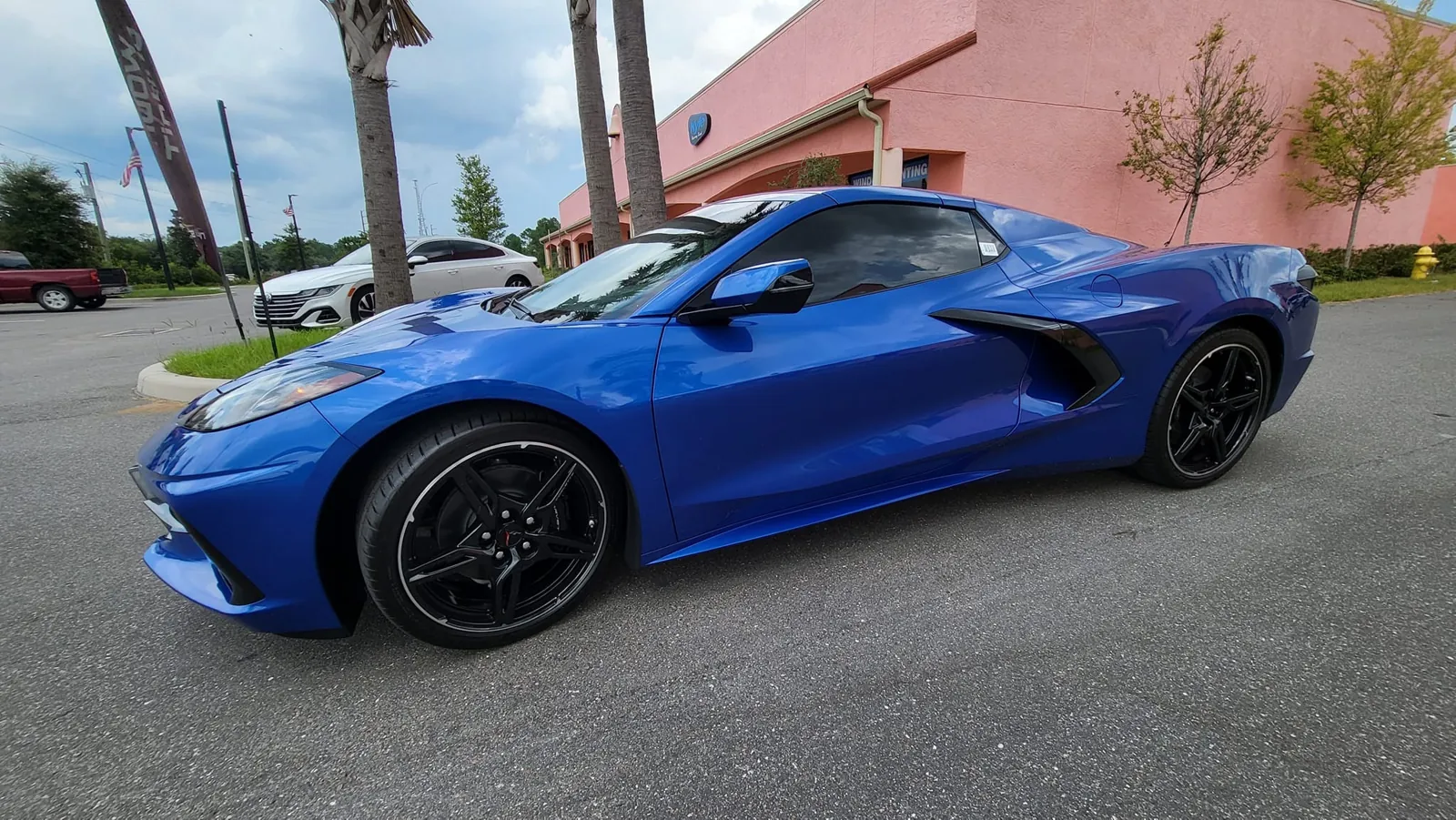
Full hood, full fenders, bumper, mirrors and headlights. No visible line across the hood. The usual choice on sports cars.
High-impact add-ons
Rocker panels, rear wheel arches behind the tires, door edges, door cups and the rear bumper load area.
Prep is the job
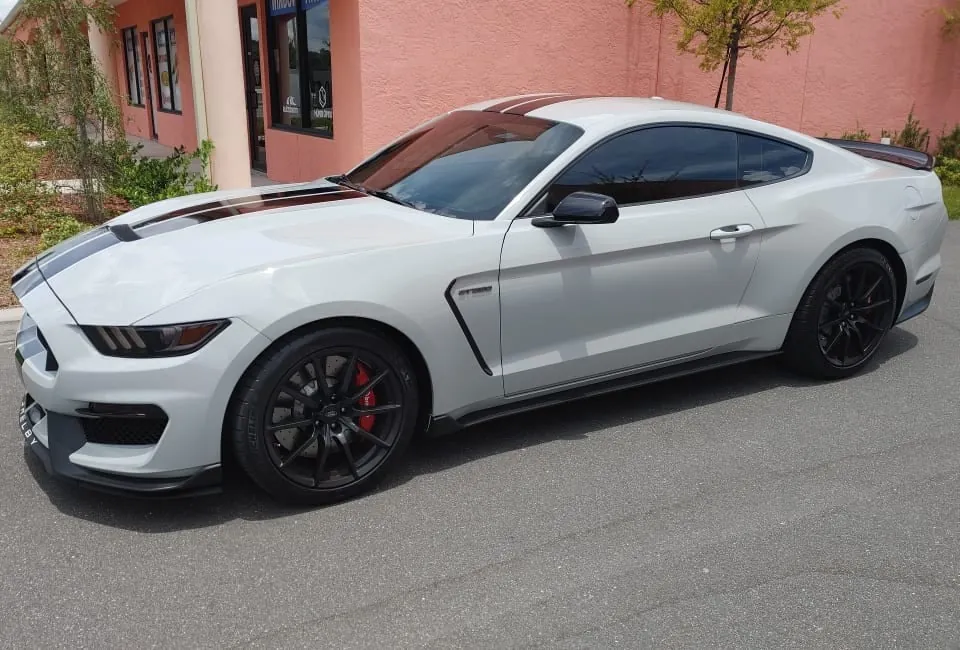
Most of the time on a PPF install goes into what you never see: decontaminating the paint, polishing out swirls, and test-fitting patterns. Film wraps edges wherever the panel allows so there is less to catch on and lift. Pair it with a ceramic coating on top and the car becomes very easy to keep clean.
PPF questions
Is PPF noticeable?
Good clear film on a well-prepped panel is hard to spot from a few feet away. Up close you may see an edge on partial coverage, which is why many people choose a full front.
How long does paint protection film last?
Quality urethane film is typically warrantied for years by its manufacturer when cared for properly. We will go over the specific warranty for the film we install on your car.
Can PPF go on a used car?
Yes, but the paint should be corrected first. Film locks in whatever is underneath it, swirls included.
Ready when you are.
Tell us the year, make and model and what you are after. We will get back to you with options and an honest answer.